Stories
Inca Justice According to Guaman Poma: Officials, Inspections and Punishments

Who was responsible for ensuring justice in each province?

Guaman Poma attributes to the Inca an order intended to ensure good justice: each province was to have a governor, whom he calls a tocricoc.1According to the chronicler, these governors came from the Incas known as orejones of Hanan Cuzco and Lurin Cuzco.1
In this account, justice appears as a responsibility the Inca assigns across the provinces through his governors.1According to the order recorded by Guaman Poma, the tocricoc was to arrange inspections of houses and their contents twice a year.3
Who made arrests, and who could become a constable?
Guaman Poma calls the chief constable uatay camayoc, explaining the name by his role in making arrests; he calls the lesser constables chacnay camayoc.67
According to the chronicler, the office was given to bastard sons or nephews of the Incas or of members of the social divisions he mentions, rather than to a poor Indian.7
What was inspected during household visits?

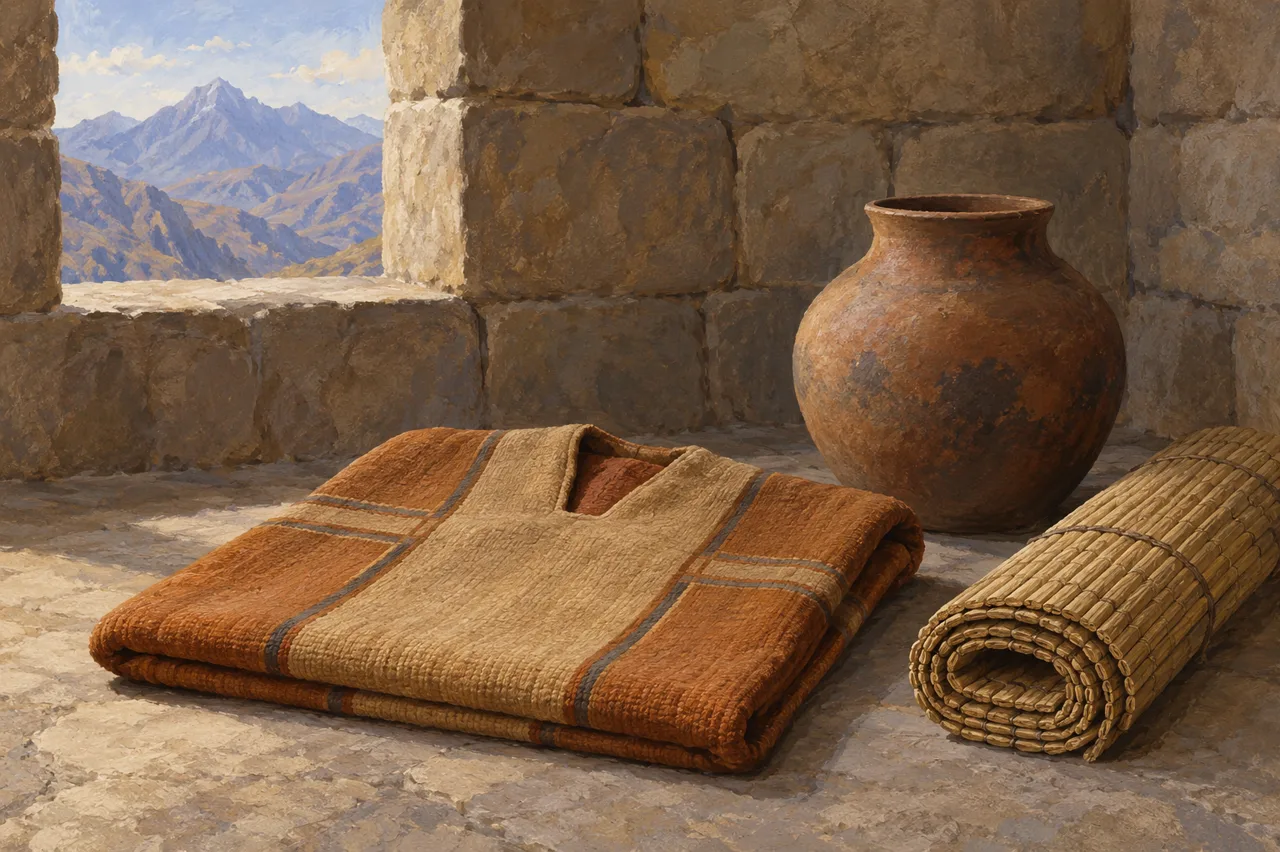
The order Guaman Poma attributes to the Inca required that houses, clothing, pots and whatever their inhabitants had worked on and raised be inspected twice a year.3This list suggests that, in the chronicler's account, the governor's oversight extended both to the household interior and to the fruits of its inhabitants' labor.3
According to the same passage in Guaman Poma, a tocricoc who failed to fulfill this duty was to be cruelly punished.3
What does he say about laziness and filth?
Guaman Poma includes among the Inca's punishments one for the lazy, dirty and “filthy who have nothing clean.”4
Read alongside the inspections of houses, clothing and pots, this attention to cleanliness suggests that the justice described by Guaman Poma extended to domestic habits.43
What punishment does he describe for drunkards, and what judgment does he add?
Guaman Poma states that the Inca's justice ordered drunkards to be killed by drowning.58The chronicler adds his own judgment: he maintains that he could find no other remedy for ending drunkenness.58
The passage allows us to distinguish between the punishment Guaman Poma attributes to the Inca's justice and his own view that he finds no other remedy for drunkenness.5
How we know
Claims cited: 8 · checked against our sources: 0 · not independently fact-checked: 8.
Sources
For good justice the Inca ordered that in each province there be a corregidor 'whom they called tocricoc', who was 'of the broken-ear Incas, Hanan Cuzco, Lurin Cuzco'.
not independently fact-checked primary source
Guaman Poma de Ayala, Felipe, c.1535-c.1616, Nueva corónica y buen gobierno (GKS 2232 4º) — kb.dk transcription cap01#b141:184760-185614
The Inca's alguacil mayor was called uatay camayoc, 'because he seized'; the lesser alguaciles were chacnay camayoc, and the post went not to a poor Indian but to bastard sons or nephews of the Incas.
not independently fact-checked primary source
Guaman Poma de Ayala, Felipe, c.1535-c.1616, Nueva corónica y buen gobierno (GKS 2232 4º) — kb.dk transcription cap01#b267
The Inca ordered that 'all the houses and clothes and pots and what they have worked and raised' be visited twice a year, and that the corregidor tocricoc who failed be cruelly punished.
not independently fact-checked primary source
Guaman Poma de Ayala, Felipe, c.1535-c.1616, Nueva corónica y buen gobierno (GKS 2232 4º) — kb.dk transcription cap01#b148:198486-199876
Guaman lists among the Inca's punishments the 'punishment of the lazy and dirty and filthy who have nothing clean', with the Quechua glosses of the titles — allicac, churinpi camachicoc, hunu/waranga/pisca pachaca/pachaca/pisca chunga/chunga/pisca camachicoc — and of the offenses — suwa, wach'uq, pallqu, iskay sunqu.
not independently fact-checked primary source
Guaman Poma de Ayala, Felipe, c.1535-c.1616, Nueva corónica y buen gobierno (GKS 2232 4º) — kb.dk transcription cap01#b239:320777-321605
Guaman asserts that the Inca's justice ordered the drunkard killed 'and drowned him like animals', and in his own judgment 'I find no other remedy' for removing drunkenness.
not independently fact-checked primary source
Guaman Poma de Ayala, Felipe, c.1535-c.1616, Nueva corónica y buen gobierno (GKS 2232 4º) — kb.dk transcription cap01#b755:1120882-1121846
The chief constable was called uatay camayoc because he seized; the chacnay camayoc were lesser constables; the office went not to a poor Indian but to bastard sons or nephews of the Incas, per Guaman Poma.
not independently fact-checked primary source
Guaman Poma de Ayala, Felipe, c.1535-c.1616, Nueva corónica y buen gobierno (GKS 2232 4º) — kb.dk transcription cap01#b267
The alguazil mayor: 'uatay camayoc because he seizes; chacnay camayoc were the lesser bailiffs' — and the office was not given to a poor Indian, 'but to bastard sons or nephews of the Incas' or of the named moieties.
not independently fact-checked primary source
Guaman Poma de Ayala, Felipe, c.1535-c.1616, Nueva corónica y buen gobierno (GKS 2232 4º) — kb.dk transcription cap01#b267
'The Inca's justice at once ordered the drunkard killed and drowned him like animals'; and 'the Indians of the llanos… drunk, with knives and garrotes, drinking must and new wine and the ahuapi… they die without confession like horses'; and to remove drunkenness 'I find no other remedy'.
not independently fact-checked primary source
Guaman Poma de Ayala, Felipe, c.1535-c.1616, Nueva corónica y buen gobierno (GKS 2232 4º) — kb.dk transcription cap01#b755:1120882-1121846
leyenda-dorada · https://leyendadorada.com/en/stories/inca-justice-guaman-poma · accessed November 22, 2026