Stories
Malinche and the role of the “tongue”: interpreting for Cortés

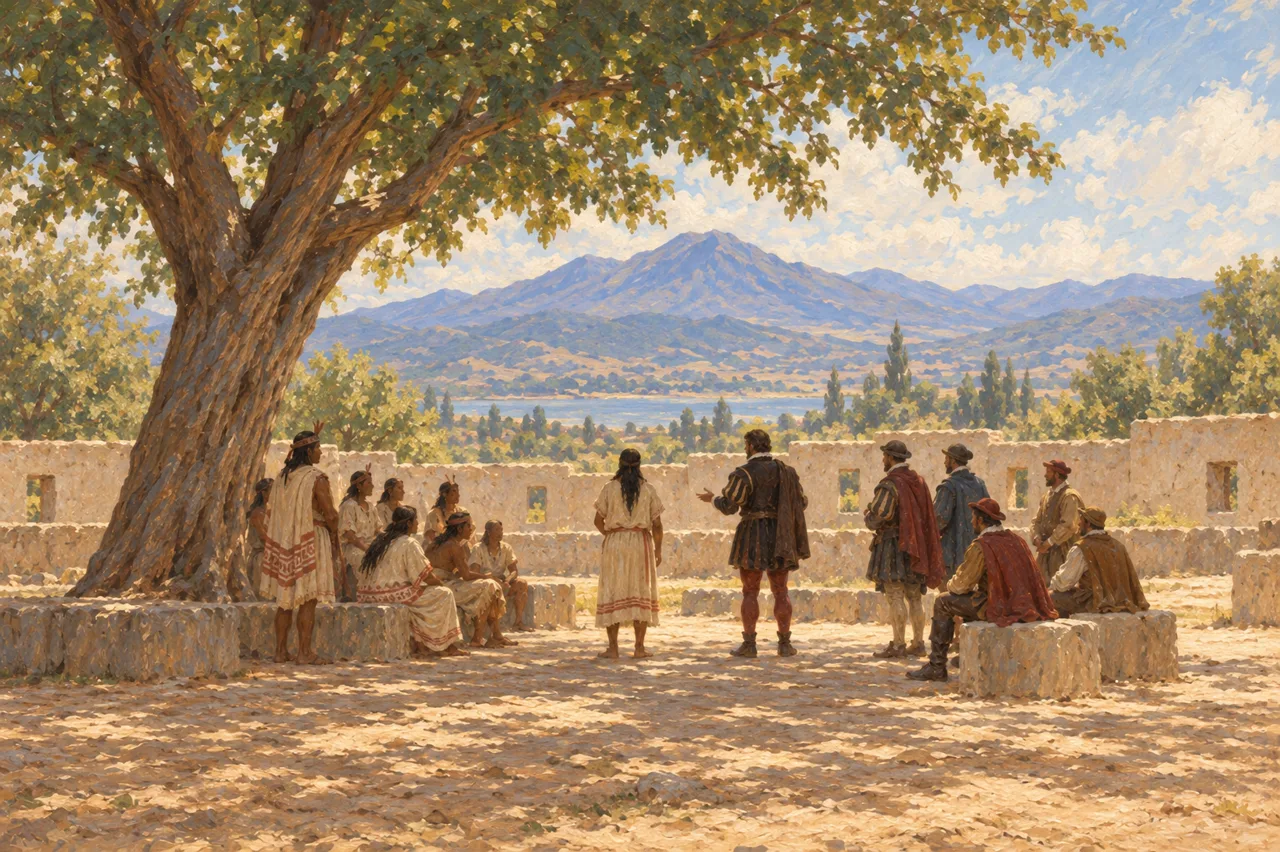
Who served as “tongues” for Cortés?

The fact-checked study presents Malinche and Jerónimo de Aguilar as Cortés’s interpreters and considers the role of the “tongue” indispensable.1
An interpretive note awaiting verification describes doña Marina as Cortés’s interpreter, while another attributes that role in the fleet to Aguilar.23
How might translation between Marina and Aguilar have worked?

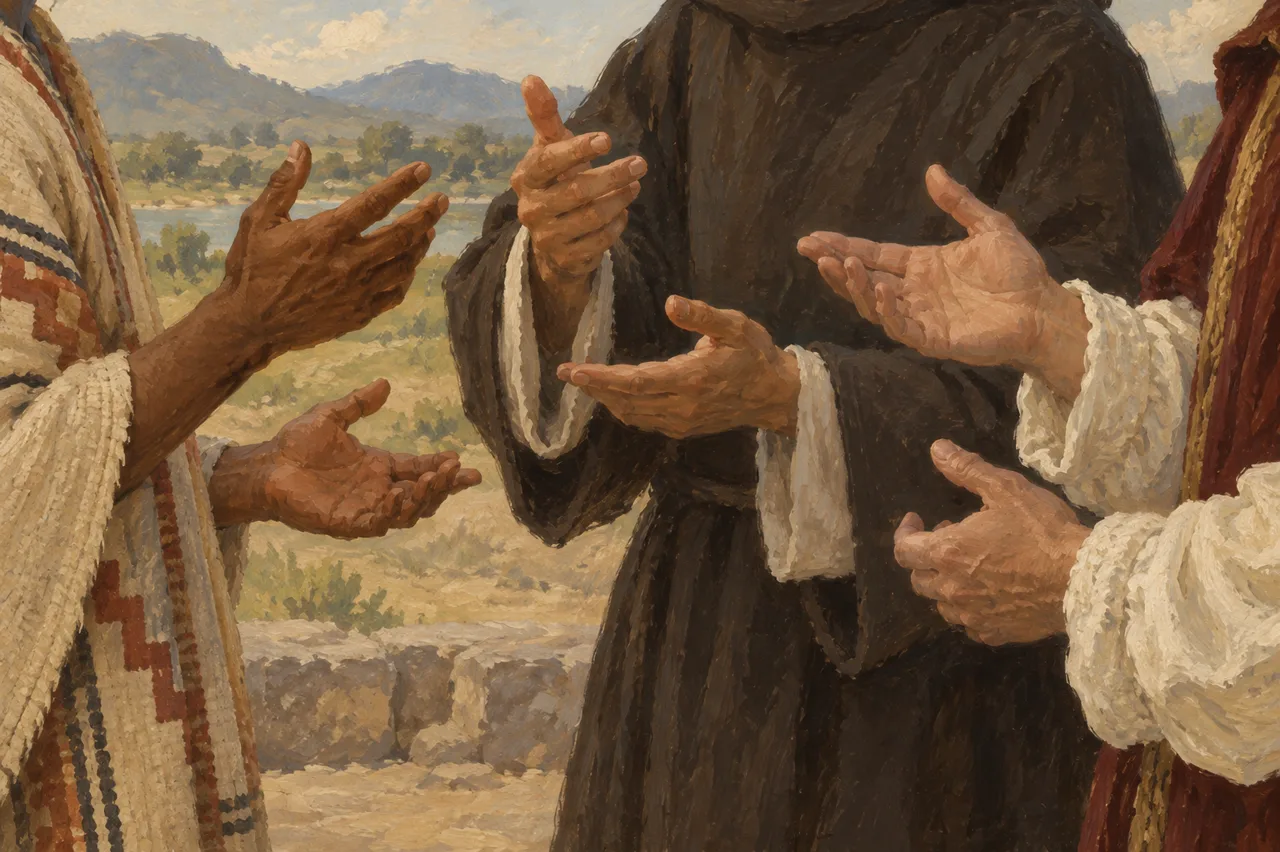
According to the note on the translation chain, which remains unverified, doña Marina knew the language of Guacacualco, identified there as the language of Mexico, and that of Tabasco.4The same note states that Jerónimo de Aguilar knew the languages of Yucatán and Tabasco and rendered what was said into Castilian for Cortés.4If we follow that description, the language of Tabasco would have served as the link between the two interpreters.4
The note on translation skills, also awaiting verification, records Bernal Díaz’s assessment of this arrangement: “it was a great beginning for our conquest”.5Another unverified passage recounts that doña Marina understood a question about the lord because she knew the language in which it was asked.6
What do we know about the names Marina and Malinche?
The fact-checked study identifies Malinche as doña Marina.1The note on the name, still unverified, presents Marina as a baptismal name and attributes to Las Casas an account stating that Indigenous people called her Malinche.7
Another note awaiting verification states that Indigenous people called Cortés Malinche because doña Marina was always in his company, especially when envoys arrived.8Since these two notes apply the name to different people, it is useful to distinguish these uses without treating the relationship between them as settled.78
What does the phrase “doña Marina the tongue” convey?
The note on the name attributes the phrase “doña Marina the tongue” to Díaz, although that attribution still awaits verification.7Read alongside the fact-checked study of the interpreters, the phrase brings together the name and the role by which she was identified.71
How we know
Claims cited: 8 · checked against our sources: 1 · not independently fact-checked: 7.
Sources
The interpreter's office was indispensable: Jerónimo de Aguilar and Malinche (doña Marina) acted as Cortés's interpreters.
fact-checked scholarly interpretation
Mariano González Clavero, Roberto Blanco Andrés, América española. Descubrimiento, conquista y asentamiento OEBPS/Text/part0040.xhtml#b6
Lengua is an office with a name: the Indian woman "given the name doña Marina" — Malinche — became Cortés’s tongue.
not independently fact-checked scholarly interpretation
Bernal Díaz del Castillo, Verdadera historia de los sucesos de la conquista de la Nueva-España (1 de 3) cap36#b9
Bartolomé de las Casas, Historia de las Indias (vol. 4 de 5) cap99#b1:916371-917395
Interpreter is an office with a name: "the same friar with our tongue Aguilar preached to the twenty Indian women" — Jerónimo de Aguilar was the fleet’s tongue.
not independently fact-checked scholarly interpretation
Bernal Díaz del Castillo, Verdadera historia de los sucesos de la conquista de la Nueva-España (1 de 3) cap36#b9
Doña Marina knew the tongue of Coatzacoalcos, which is Mexico’s own, and that of Tabasco, as Jerónimo de Aguilar knew that of Yucatán and Tabasco; Aguilar rendered it in Castilian to Cortés.
not independently fact-checked primary source
Bernal Díaz del Castillo, Verdadera historia de los sucesos de la conquista de la Nueva-España (1 de 3) cap37#b6
Interpretation was a conquest trade: Bernal Díaz says doña Marina 'knew the tongue of Guacacualco, which is Mexico's own, and knew Tabasco's', and Aguilar rendered it into Castilian for Cortés — 'it was a great beginning for our conquest'.
not independently fact-checked scholarly interpretation
Bernal Díaz del Castillo, Verdadera historia de los sucesos de la conquista de la Nueva-España (1 de 3) cap37#b6
They asked who was the Tlatoan, which in their tongue they call the lord; and doña Marina understood it well, for she knew the tongue very well.
not independently fact-checked primary source
Bernal Díaz del Castillo, Verdadera historia de los sucesos de la conquista de la Nueva-España (1 de 3) cap38#b1
Marina is a period baptismal name: Las Casas tells that "an Indian woman, who was afterwards called Marina, and the Indians called her Malinche" —Cortés's interpreter; Díaz calls her "doña Marina la lengua".
not independently fact-checked primary source
Bartolomé de las Casas, Historia de las Indias (vol. 4 de 5) cap98#b1:902809-903939
Bernal Díaz del Castillo, Verdadera historia de los sucesos de la conquista de la Nueva-España (3 de 3) cap08#b5
The Indians called Cortés Malinche because doña Marina, the Spaniards’ tongue, was always in his company, especially when envoys came.
not independently fact-checked primary source
Bernal Díaz del Castillo, Verdadera historia de los sucesos de la conquista de la Nueva-España (1 de 3) cap74#b6
leyenda-dorada · https://leyendadorada.com/en/stories/malinche-role-interpreter-cortes · accessed November 22, 2026