Stories
Mexico-Tenochtitlan from the Water: The Lake and Cortés’s Ships

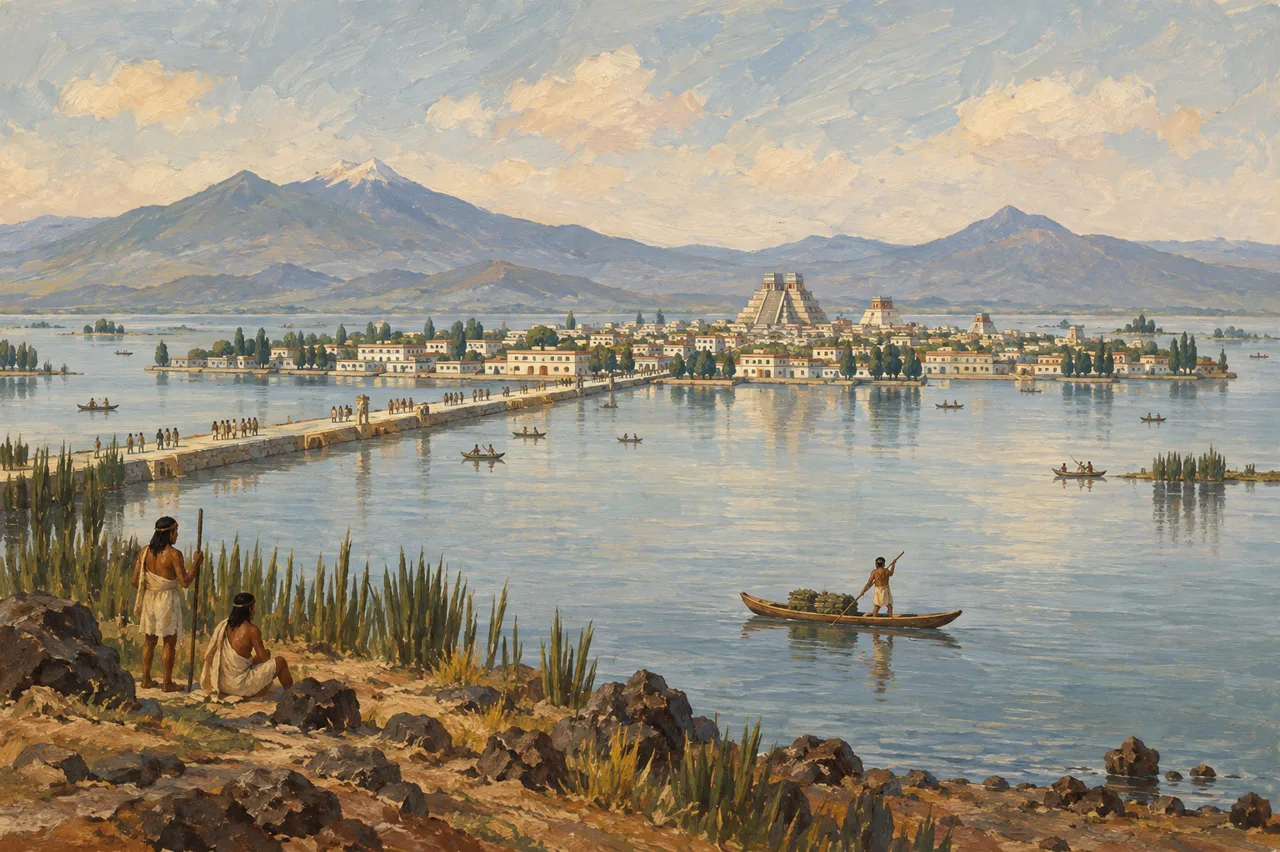
How was the city connected to the mainland in 1519?

The source places Mexico-Tenochtitlan on an island in Lake Texcoco in 1519, linked to the mainland by causeways.1This description shows that the island setting coexisted with overland access, although the source does not list those crossings.1
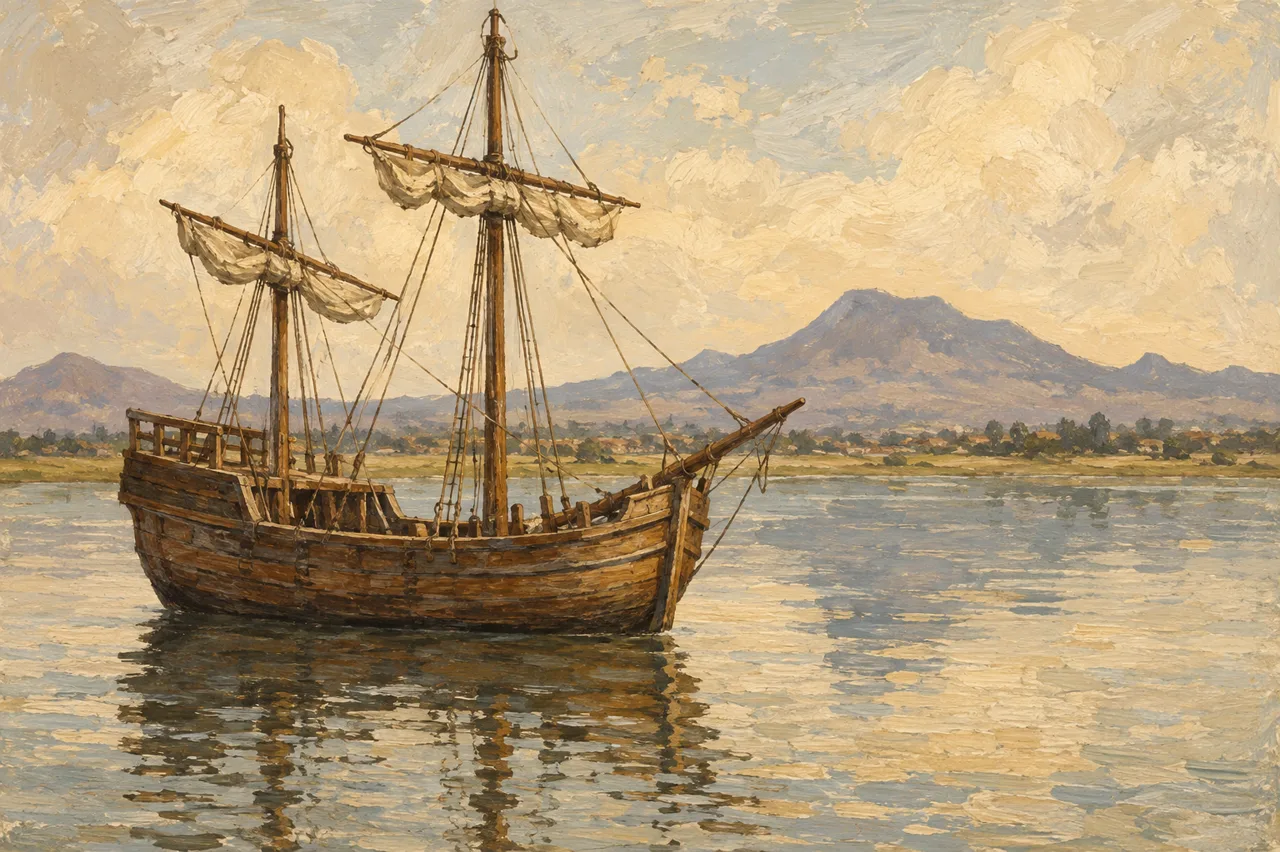
What is said about Cortés’s brigantines?

According to one of the sources, which awaits verification, Cortés ordered brigantines built to sail on the lake of Mexico.2The same account describes them as stout vessels that sailed well.2That assessment does not allow us to calculate their capacity or speed, since the source provides no measurements.2
What does a soldier say about the bridges and causeways?
During the retreat from Mexico, according to a soldier’s still-unverified account, all the bridges and causeways were full of warriors.3The source neither identifies the soldier nor locates each of those access points.3
Read alongside the description of the island city, this testimony suggests that its overland connections could also be places where conflict was concentrated.31
Can we say that the city was already on an island in 1492?
The source presents Mexico-Tenochtitlan’s island setting in 1492 as an inference, not a measured fact.1The reasoning begins with the attribution of the causeways to an earlier ruler, which the source draws from Las Casas.1That argument supports a proposed island setting before 1519, but provides no direct confirmation for 1492.1
How far do these sources allow us to reconstruct navigation on the lake?
The cited sources on the city’s setting and the brigantines neither trace routes nor describe sailing maneuvers.12The sailing qualities attributed to the brigantines in one of the still-unverified sources are also insufficient to reconstruct how they were handled.2
How we know
Claims cited: 3 · checked against our sources: 1 · not independently fact-checked: 2.
Inference noted in our source records: island condition in 1492 inferred from the pre-conquest attribution of the causeways; no measured 1492 shoreline
About the sources, per our source records: one register — Spanish chronicle — attested in two editions (Díaz, Las Casas); not two independent registers
Sources
When the Spanish arrived in 1519, Mexico-Tenochtitlan stood on an island in Lake Texcoco, linked to the mainland by causeways that Las Casas attributes to an earlier ruler; that the city was already insular in 1492 is an inference from that attribution, not a measured datum.
fact-checked inference
Verdadera historia de los sucesos de la conquista de la Nueva-España (1 de 3) — Bernal Díaz del Castillo (Project Gutenberg; public-domain transcription, location anchor): «Íbamos por nuestra calzada adelante, la cual es ancha de ocho pasos, y va tan derecha á la ciudad de Méjico, que me parece que no se tuerce poco ni mucho; é puesto que es bien ancha, toda iba llena de aquellas gentes, que no cabian, unos que entraban en Méjico y otros que salian, que nos venian á ver, que no nos podiamos rodear de tantos como vinieron,» cap88#b2
Verdadera historia de los sucesos de la conquista de la Nueva-España (1 de 3) — Bernal Díaz del Castillo (Project Gutenberg; public-domain transcription, location anchor) cap88#b3
Historia de las Indias (vol. 5 de 5) — Bartolomé de las Casas (Project Gutenberg; public-domain transcription, location anchor): «amplió la ciudad y dió órden para que se hiciesen las calzadas por la laguna, porque de la ciudad se pudiese salir por tierra enjuta sin tener necesidad de canoas ó barcos» cap77#b1:818200-819308
Cortés ordered brigantines built — stout and swift — to sail on the lake of Mexico.
not independently fact-checked primary source
Bernal Díaz del Castillo, Verdadera historia de los sucesos de la conquista de la Nueva-España (1 de 3) cap98#b1
In the retreat from Mexico, a soldier relates, all the bridges and causeways were full of warriors.
not independently fact-checked primary source
Bernal Díaz del Castillo, Verdadera historia de los sucesos de la conquista de la Nueva-España (2 de 3) cap18#b19
leyenda-dorada · https://leyendadorada.com/en/stories/mexico-tenochtitlan-lake-cortes-brigantines · accessed November 22, 2026