Stories
Behechio, Lord of Xaraguá: Anacaona and Roldán's Request

What do we know about Behechio's rule in Xaraguá?

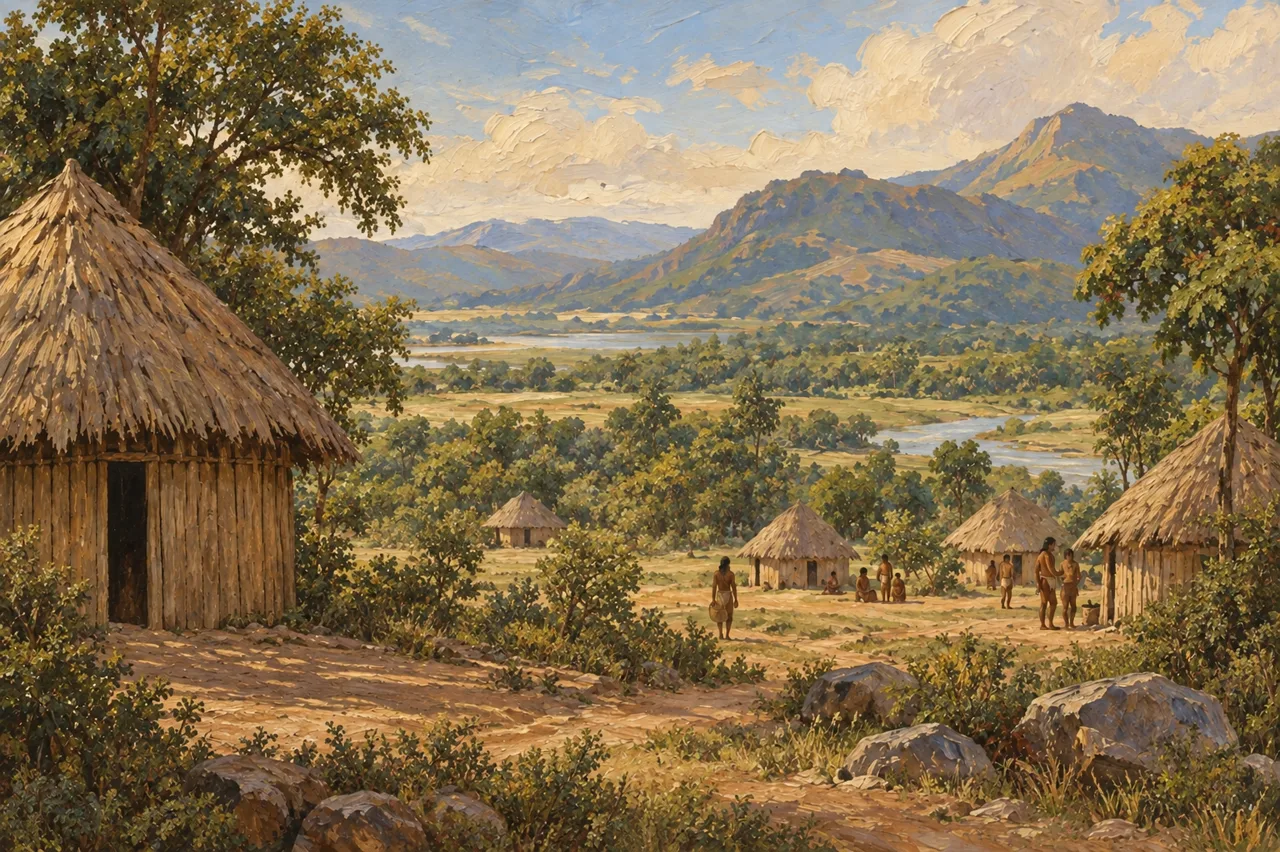
The verified passage identifies Xaraguá as one of Hispaniola's province-chiefdoms under Behechio's rule, in the context of Bartolomé Columbus's mission around 1496–1498.1The reference covers both the settlement of Xaraguá and the province and calls Behechio a king.1
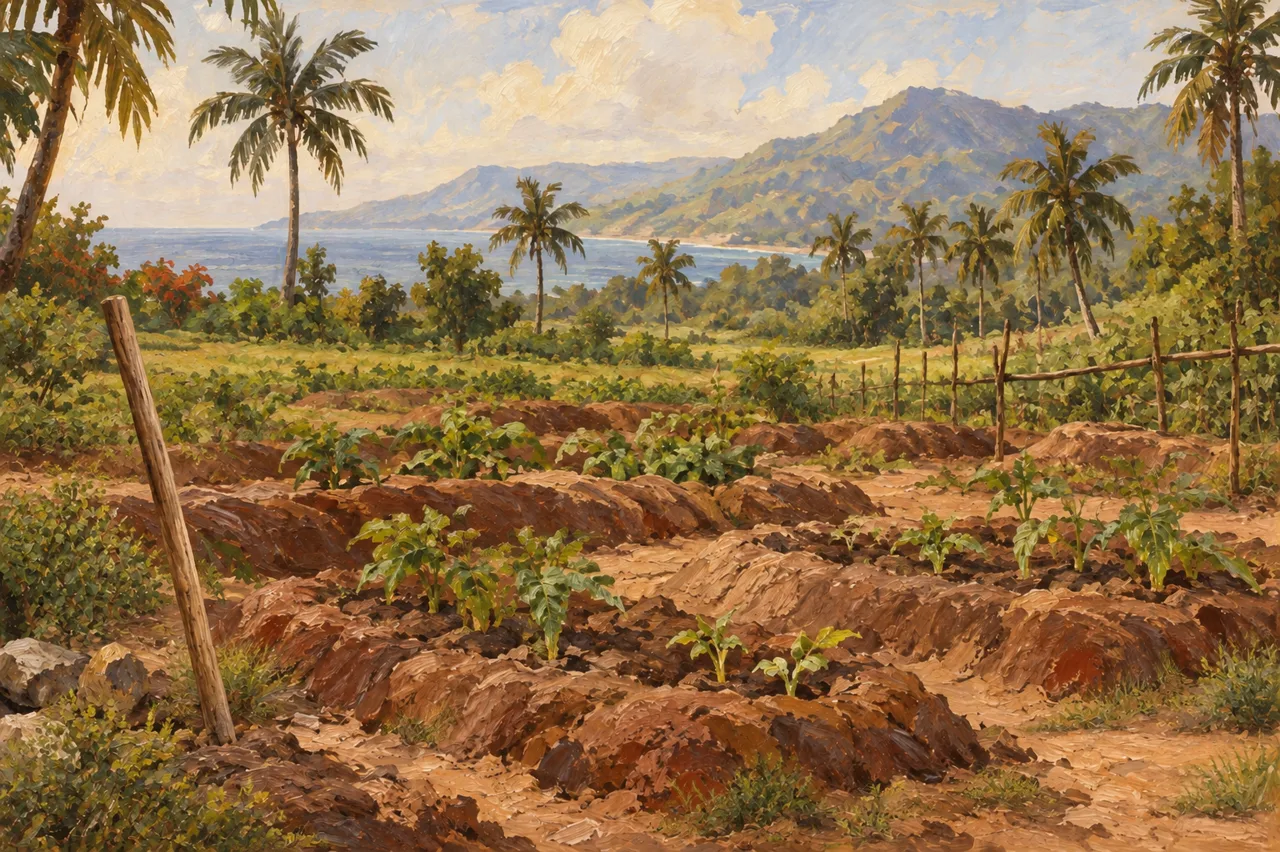
Extending that rule back to 1492 would be an inference, since the passage concerns a later mission.1The unverified account about cultivating the fields also presents Behechio as one of the island's greatest lords.3
What was Anacaona's standing alongside Behechio?
According to the unverified account of Caonabo's death, Anacaona, Caonabo's wife and Behechio's sister, moved to Xaraguá after Caonabo died during the sea voyage to Spain.2The same account attributes the decision to send Caonabo and his brother to Spain to Bartolomé and states that the brother died within days of learning that they were to leave.2
In describing Anacaona's life in Xaraguá, the text states that she was as respected and feared as Behechio and praises her courage, spirit and wit.2That comparison can be read as recognition of her authority, although it does not establish how the siblings shared decision-making.2
How does the account describe Bartolomé's reception?
The unverified account of the reception presents Behechio and Anacaona coming out to meet Bartolomé accompanied by a large crowd, lords and members of the nobility.5The narrative calls Behechio a king and Anacaona a queen and places Xaraguá sixty leagues from Santo Domingo.5
The passage describes songs and dances called areitos and mentions thirty women walking ahead, identified as Behechio's wives.5The entourage can be understood as a public expression of the siblings' rank, although the excerpt does not explain the political meaning of each gesture.5
What did Roldán request, and what did Las Casas condemn?

According to the unverified passage about cultivating the fields, after returning to the Admiral's authority, Roldán began asking him to put Behechio in charge of cultivating his fields.3The account adds that, during his rebellion, Roldán had kept Behechio intimidated through actions the text describes as tyrannical.3
In another unverified excerpt, Las Casas condemns the Admiral for handing Behechio over to serve Roldán, who in turn placed him in the service of men the author despises.4Las Casas calls this action tyrannical and contrasts Behechio's rank with the service he condemns.4
What did the Admiral's letters sent in October 1498 report?
According to the unverified passage by Las Casas, the Admiral wrote at length to the monarchs about Roldán's rebellion in letters carried by the five ships that departed on October 18, 1498.6The account states that the Admiral described the rebels' destruction and robberies and blamed their actions for the unrest in Xaraguá, identified as Behechio's territory.6
In that same passage, Las Casas estimates that the ships carried some six hundred enslaved Indigenous people.6
How we know
Claims cited: 6 · checked against our sources: 1 · not independently fact-checked: 5.
Sources
Xaraguá was one of Hispaniola's province-chiefdoms, under king Behechio — 'the city and settlement of Xaraguá… the whole province with king Behechio'. The passage narrates Bartolomé Colón's mission (c. 1496-1498); the projection onto the 1492 epoch is declared an inference.
fact-checked primary source
Bartolomé de las Casas, Historia de las Indias (vol. 2 de 5) cap31#b1:260725-261612
The adelantado don Bartolomé agreed to send Caonabo and his brother to Spain in two caravels, holding it inconvenient to keep him detained being so principal a lord; once they knew they were to go, the brother died within days and Caonabo, out at sea, died a few days' sail on; and his wife Anacaona, Behechio's sister, went to live in Xaragua, 'as honored and feared as a lady as Behechio himself', 'very valiant and of great spirit and wit'.
not independently fact-checked primary source
Gonzalo Fernández de Oviedo y Valdés, Historia General y Natural de las Indias, islas y tierra-firme del Mar Océano cap15#b6cap15#b7
Roldán reduced to the Admiral's obedience, he began to ask him that king Behechio —who while Roldán was in revolt held him cowed by his tyrannies— 'should take charge of making his labranzas'; Behechio being among the greatest kings and lords of all the island.
not independently fact-checked primary source
Bartolomé de las Casas, Historia de las Indias (vol. 2 de 5) cap71#b2:658072-660884
LC: "that so great a king as Behechio the Admiral gave to serve Roldán, and Roldán gave him to vile men, perhaps whipped among them — what greater tyrannical wickedness?"
not independently fact-checked primary source
Bartolomé de las Casas, Historia de las Indias (vol. 2 de 5) cap85#b1:812830-813309
Sixty leagues Xaraguá lies from Santo Domingo; at don Bartolomé's arrival came out 'infinite people, and many lords and nobility' with king Behechio and the queen his sister Anacaona, 'singing their songs and doing their dances, which they called areitos', and ahead thirty women the king held as wives.
not independently fact-checked primary source
Bartolomé de las Casas, Historia de las Indias (vol. 2 de 5) cap31#b1:260725-261612cap31#b1:261613-262719
The five ships that sailed on October 18, 1498 —'in which my father went to Castile', Las Casas writes— went loaded with Indians made slaves, 'they would be in all 600', and for the others' freight he gave the Maestres 200 slaves; in them the Admiral wrote at length to the Kings of Roldán's rebellion and the harms and robberies they did, and that they had the Xaraguá of king Behechio in tumult.
not independently fact-checked primary source
Bartolomé de las Casas, Historia de las Indias (vol. 2 de 5) cap70#b1:643485-644428
leyenda-dorada · https://leyendadorada.com/en/stories/behechio-lord-xaragua-anacaona-roldan · accessed November 22, 2026